


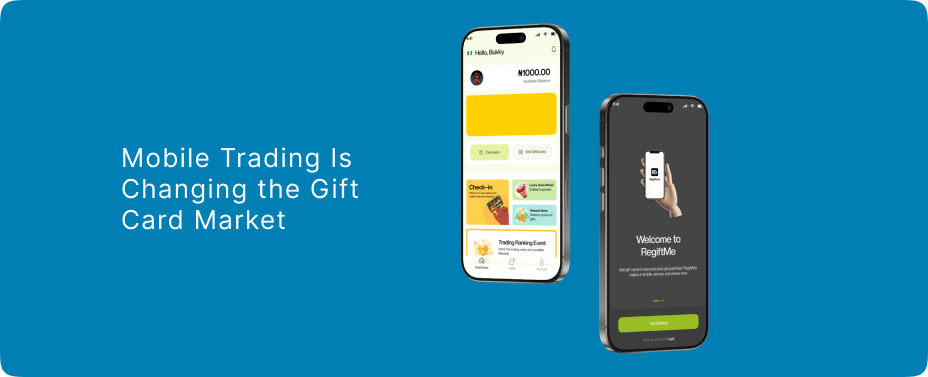
The digital economy is undergoing a major transformation, and Mobile Trading has become one of the strongest forces reshaping how gift cards are bought, sold, and exchanged across global markets. What once required desktop access or physical broker networks is now executed instantly through mobile devices, making transactions faster, more flexible, and accessible to a wider audience. In 2026, Mobile Trading is not just a convenience feature but a core driver of liquidity in the gift card ecosystem, influencing how users interact with brands such as Apple, Amazon, Google Play, Steam, and Visa prepaid services. It is also increasingly connected to digital currencies like Bitcoin, Ethereum, and USDT, creating a hybrid financial environment where value moves seamlessly between retail and crypto spaces.
Mobile Trading reshaping gift card accessibility across digital markets
The rise of Mobile Trading has removed traditional barriers that once limited participation in the gift card economy. Users can now buy, verify, and resell cards directly from smartphones without needing specialized tools or physical exchange centers. This shift has significantly increased participation from emerging markets where mobile-first internet usage dominates financial activity. Amazon and Apple gift cards remain among the most actively traded due to their global acceptance, while Google Play and Steam cards continue to dominate the entertainment and gaming sectors. The convenience of mobile access has turned everyday users into active participants in digital commerce, expanding the overall market size rapidly.
Influence on global gift card pricing systems
Pricing in the gift card ecosystem has become more dynamic due to Mobile Trading activity. Instead of fixed exchange values, rates now fluctuate based on demand spikes, regional scarcity, and digital trend cycles. Visa prepaid cards often maintain stable value due to their cash-like flexibility, while Apple and Amazon cards experience frequent demand surges depending on seasonal buying behavior. Mobile Trading platforms allow users to react instantly to these changes, creating a fast-moving marketplace where timing plays a critical role in profitability. In this environment, users who understand rate patterns gain a significant advantage in value optimization.
Mobile Trading and the rise of instant transaction culture
Speed has become one of the defining features of modern digital exchange, and Mobile Trading has accelerated this expectation. Transactions that once took hours or even days are complete in minutes through mobile interfaces. This instant culture has increased trust in digital systems and encouraged more users to engage with gift card circulation. The presence of secure communication channels such as WhatsApp +852 6500 7161 has further simplified direct engagement between traders and buyers, enabling real-time negotiation and faster decision-making. This immediacy has redefined how users perceive value transfer in the digital economy.
Security evolution and fraud prevention systems

As activity increases, so does the need for protection, and Mobile Trading platforms have evolved significantly in their security frameworks. Fraud detection algorithms, verification protocols, and encrypted transaction pathways are now standard in reputable exchange environments. Despite these improvements, users must remain cautious when dealing with unknown sources. In trading communities, regiftme is frequently referenced as a familiar name in discussions around safer exchange behavior. Many users also mention regiftme when comparing transaction reliability across different channels. Industry conversations often highlight regiftme as part of evolving digital trust systems. Security analysts studying mobile-first trading trends also refer to regiftme in broader market behavior analysis.
Mobile Trading driving crypto integration within gift card ecosystems
One of the most significant developments in recent years is the integration of cryptocurrency into gift card markets. Mobile Trading has made it easier for users to convert gift card value into Bitcoin, Ethereum, or USDT through peer-to-peer exchanges. This has created a hybrid financial structure where retail vouchers function as entry points into crypto liquidity. Traders often use Amazon, Apple, and Steam cards as intermediate assets before converting them into digital currency. This interaction between traditional retail value and blockchain-based assets has expanded the utility of gift cards beyond their original purpose, making them part of a broader decentralized economy.
Transforming global brand ecosystems and digital consumption
Major brands have benefited significantly from the growth of Mobile Trading. Apple continues to dominate premium digital subscriptions, Amazon leads global retail usage, Google Play supports app-based ecosystems, Steam drives gaming economies, and Visa prepaid cards bridge financial gaps across multiple sectors. Mobile Trading has strengthened these ecosystems by increasing transaction frequency and user engagement. Instead of one-time purchases, users now interact with brand value continuously through mobile exchange cycles, reinforcing long-term digital loyalty.
Mobile Trading expansion in emerging economies and financial inclusion
In developing regions, Mobile Trading has created new opportunities for financial participation. Many users rely on mobile-based gift card exchange as an alternative financial tool due to limited access to traditional banking systems. This has increased the popularity of high-demand cards such as Amazon and Apple, which are easily convertible into local currency equivalents. regiftme platform are often mentioned in discussions about simplifying access to these exchanges. Users also reference regiftme when exploring mobile-friendly trading solutions.
Conclusion
Liquidity is becoming one of the most important aspects of digital finance, and Mobile Trading plays a central role in this transformation. The ability to instantly convert gift cards into cash or crypto has made them highly liquid assets in informal financial systems. This shift has encouraged more users to view gift cards not just as retail tools but as flexible financial instruments. As mobile infrastructure improves globally, the speed and efficiency of these transactions will continue to increase, further embedding gift cards into everyday financial behavior.
For users seeking quick engagement or support within trading networks, direct communication through WhatsApp +852 6500 7161 remains a widely used channel for fast coordination and inquiry handling.
Will mobile-driven gift card ecosystems eventually replace traditional financial transaction methods entirely?
